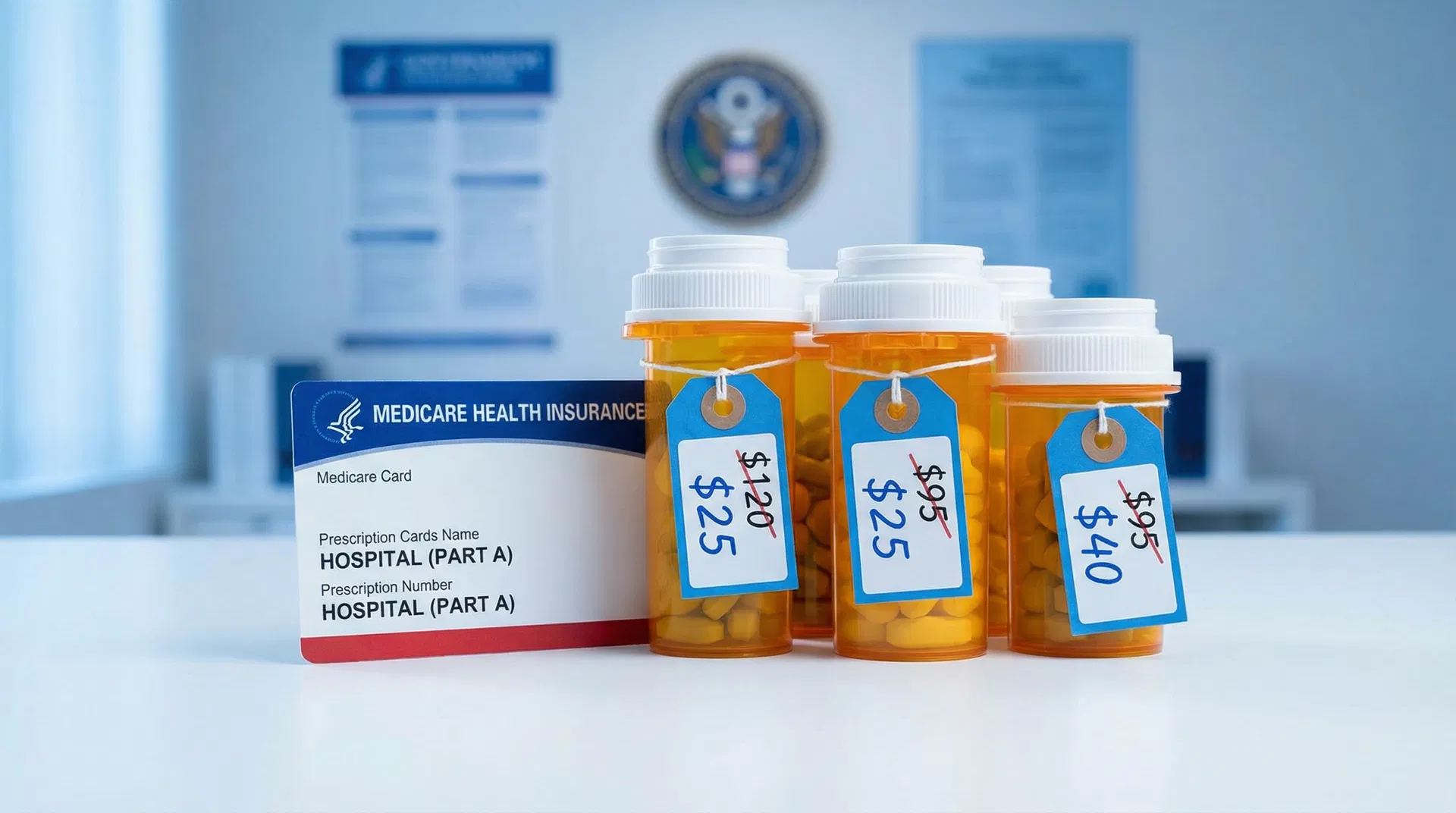
For the first time in the 60-year history of Medicare, the federal government sat across the table from pharmaceutical companies and negotiated drug prices. On January 1, 2026, the results of those negotiations went into effect — and for the 8.8 million Americans who take one of the 10 selected drugs, the financial impact is real and immediate.
The negotiations were made possible by the Inflation Reduction Act of 2022 (IRA), signed by President Biden in August of that year. Before the IRA, Medicare was legally prohibited from negotiating drug prices — a restriction that had been in place since the Medicare Prescription Drug, Improvement, and Modernization Act of 2003. That prohibition, often called the "non-interference clause," meant that Medicare paid whatever price drug manufacturers set, with no ability to push back. The IRA repealed it.
The Centers for Medicare & Medicaid Services (CMS) selected 10 drugs covered under Medicare Part D — the outpatient prescription drug program — for the first cycle of negotiations. The drugs were chosen based on high total Medicare gross expenditures and the absence of generic or biosimilar competition. Together, these 10 drugs accounted for $56.2 billion in total Part D gross covered prescription drug costs in 2023, representing approximately 20% of all Part D spending that year.
The Complete Price Table: What Each Drug Will Cost in 2026
The negotiated prices, which CMS refers to as Maximum Fair Prices (MFPs), went into effect on January 1, 2026. All prices below are per 30-day supply and are sourced directly from the CMS Negotiated Prices Fact Sheet published August 15, 2024.
| Drug (Generic Name) | Condition Treated | Manufacturer | 2026 Negotiated Price | Previous List Price | Discount |
|---|---|---|---|---|---|
| Eliquis (apixaban) | Blood clots, atrial fibrillation | Bristol Myers Squibb / Pfizer | $231 | $521 | 56% |
| Xarelto (rivaroxaban) | Blood clots, atrial fibrillation | Johnson & Johnson | $197 | $517 | 62% |
| Januvia (sitagliptin) | Type 2 diabetes | Merck | $113 | $527 | 79% |
| Jardiance (empagliflozin) | Diabetes, heart failure | Boehringer Ingelheim / Eli Lilly | $197 | $573 | 66% |
| Farxiga (dapagliflozin) | Diabetes, heart failure, CKD | AstraZeneca | $178 | $556 | 68% |
| Entresto (sacubitril/valsartan) | Heart failure | Novartis | $295 | $628 | 53% |
| Enbrel (etanercept) | Rheumatoid arthritis, psoriasis | Amgen | $2,355 | $7,106 | 67% |
| Imbruvica (ibrutinib) | Blood cancers (CLL, MCL) | AbbVie / Johnson & Johnson | $9,319 | $14,934 | 38% |
| Stelara (ustekinumab) | Psoriasis, Crohn's disease | Johnson & Johnson | $4,695 | $13,836 | 66% |
| Fiasp / NovoLog (insulin aspart) | Type 1 and 2 diabetes | Novo Nordisk | $119 | $495 | 76% |
Source: CMS, "Medicare Drug Price Negotiation Program: Negotiated Prices for Initial Price Applicability Year 2026," August 15, 2024.
The discounts range from 38% for Imbruvica — the smallest reduction — to 79% for Januvia, the largest. That means a Medicare patient taking Januvia for type 2 diabetes will pay $113 per month instead of $527, a savings of $414 per month or nearly $5,000 per year, assuming they were previously paying list price. In practice, most patients were not paying full list price due to insurance coverage and manufacturer rebates, but the negotiated price sets a new ceiling that benefits both patients and the Medicare program.
Why These 10 Drugs Were Chosen
The IRA required CMS to select drugs that met specific criteria: they had to be covered under Medicare Part D (not Part B, which covers physician-administered drugs), they had to lack generic or biosimilar competition, and they had to rank among the highest in total Medicare gross drug expenditures. The selection process was designed to maximize savings to the program while targeting drugs that a large number of Medicare patients depend on.
The resulting list reads like a who's who of blockbuster American pharmaceuticals. Eliquis and Xarelto are the two dominant blood thinners, used by millions of Americans with atrial fibrillation and deep vein thrombosis. Januvia, Jardiance, and Farxiga are three of the most widely prescribed diabetes medications. Entresto is the leading treatment for heart failure with reduced ejection fraction. Enbrel and Stelara are biologics used in autoimmune conditions. Imbruvica is a targeted therapy for blood cancers. And Fiasp/NovoLog is a rapid-acting insulin used by both type 1 and type 2 diabetes patients.
What these drugs share is a combination of high per-unit cost, high utilization, and no generic competition. Eliquis alone cost Medicare $18.3 billion in 2023 — the single most expensive drug in the Part D program that year, as documented in CMS Medicare Part D Spending by Drug data. Stelara cost $4.6 billion. Imbruvica cost $3.5 billion. Together, these 10 drugs consumed one-fifth of all Medicare prescription drug spending.
The Negotiation Process: How CMS Got to These Numbers
The negotiation process was more structured than a typical commercial negotiation. The IRA set out a specific statutory framework that CMS was required to follow, and the agency published detailed guidance explaining each step.
CMS sent initial offers to each participating drug company on February 1, 2024. Each manufacturer then had 30 days to respond with a counteroffer. CMS and each company then held three formal negotiation meetings during the spring and summer of 2024. For five of the 10 drugs, CMS and the manufacturer reached agreement during those meetings — in four of those cases, CMS accepted a revised counteroffer from the drug company. For the remaining five drugs, CMS sent a written final offer on July 15, 2024, which each manufacturer accepted by the statutory deadline of August 1, 2024.
The discounts achieved vary considerably by drug, and the variation reflects the complexity of the negotiations. Imbruvica received only a 38% discount — the smallest of the group — while Januvia received a 79% discount. CMS has not publicly disclosed the full reasoning behind each negotiated price, but the statutory factors it was required to consider include the drug's clinical benefit, the cost of research and development, production and distribution costs, and the availability of therapeutic alternatives.
What the Savings Mean for Patients
CMS projected that the negotiated prices would save Medicare beneficiaries an estimated $1.5 billion in out-of-pocket costs in 2026, and would save the Medicare program itself an estimated $6 billion in net covered prescription drug costs — representing a 22% reduction in net spending on these 10 drugs compared to 2023 levels.
Those aggregate numbers are significant, but the individual-level savings are what matter most to patients. Consider a Medicare Part D enrollee taking Stelara for Crohn's disease. At the previous list price of $13,836 per month, even with insurance, the patient's cost-sharing could be substantial. At the negotiated price of $4,695 — a 66% reduction — the patient's share of costs falls proportionally. For Enbrel patients with rheumatoid arthritis, the reduction from $7,106 to $2,355 per month is a difference of $4,751 per month, or more than $57,000 per year at list price.
It is important to note that most Medicare patients were not paying full list price before the negotiations. Medicare Part D plans negotiate their own rebates with manufacturers, and patients typically pay a percentage of the negotiated plan price, not the list price. The MFP sets a new ceiling that all Part D plans must use as the maximum price, which flows through to lower patient cost-sharing. The $1.5 billion in projected patient savings represents the net reduction in out-of-pocket costs after accounting for existing rebates and plan designs.
How the Negotiated Prices Compare to Other Countries
One of the most striking aspects of the CMS negotiations is that even after the discounts, Medicare's negotiated prices remain substantially higher than what patients in peer nations pay for the same drugs. A December 2024 analysis by the Peterson-KFF Health System Tracker found that Medicare was able to negotiate lower prices than the Department of Veterans Affairs (VA), but consistently higher prices than peer nations achieved.
For example, Januvia is available in Germany for approximately $60 per month — roughly half of Medicare's negotiated price of $113. Eliquis costs approximately $100 per month in Canada, compared to Medicare's negotiated price of $231. The gap reflects the structural difference between the IRA's negotiation framework — which applies only to drugs without generic competition and uses a ceiling based on a percentage of non-federal average manufacturer price — and the reference pricing and health technology assessment systems used in Europe, Canada, and Australia.
This comparison does not diminish the significance of the IRA negotiations. They represent a genuine and historic shift in US drug pricing policy. But it does illustrate that the first cycle of negotiations is a beginning, not an endpoint.
What Comes Next: The Pipeline of Future Negotiations
The IRA's negotiation program is designed to expand over time. A second set of 15 drugs was selected for negotiation in 2025, with negotiated prices taking effect on January 1, 2027. That second cycle includes some of the most high-profile drugs in American medicine, including Ozempic and Wegovy (semaglutide) for diabetes and obesity — two drugs that have dominated pharmaceutical news for the past three years.
According to KFF's March 2026 analysis, CMS estimated that the second-cycle negotiations will save Medicare $12 billion relative to existing net prices in 2024, representing net savings of 44% on those 15 medications — nearly double the percentage savings achieved in the first cycle. CMS also estimated that Medicare beneficiaries will save $685 million in out-of-pocket costs when those prices take effect in 2027.
In January 2026, CMS announced a third cycle of negotiations, selecting drugs with prices taking effect on January 1, 2028. Starting in 2027 and each subsequent year, up to 20 additional drugs will be selected for negotiation annually. The number of drugs with negotiated prices will accumulate over time, gradually expanding the program's reach across the Medicare formulary.
The Political and Legal Context
The IRA's drug pricing provisions survived a series of legal challenges from pharmaceutical manufacturers who argued that the negotiation framework was unconstitutional. Federal courts consistently rejected those challenges, and the Supreme Court declined to intervene, allowing the program to proceed on schedule.
The political durability of the program is less certain. The IRA passed without a single Republican vote in Congress, and the program has faced ongoing criticism from the pharmaceutical industry, which argues that the negotiated prices will reduce investment in drug development. The Pharmaceutical Research and Manufacturers of America (PhRMA) has argued that the IRA's pricing structure creates disincentives to develop drugs for smaller patient populations, a concern that some health economists share.
Supporters of the program counter that the pharmaceutical industry remains highly profitable, that the US pays far more for drugs than any other developed nation, and that the savings generated by the program will be reinvested in Medicare benefits. The Congressional Budget Office projected that the IRA's drug pricing provisions would reduce the federal deficit by approximately $237 billion over 10 years.
What This Means for Medicare Patients in 2026
For the 8.8 million Medicare Part D enrollees who were dispensed one of these 10 drugs in 2023, the negotiated prices represent the most direct financial benefit they have received from the IRA. The savings are automatic — patients do not need to apply for anything or switch plans. Any Part D plan that covers a selected drug must apply the Maximum Fair Price as the ceiling for that drug.
Patients who are currently taking one of the 10 negotiated drugs and are enrolled in Medicare Part D should see lower cost-sharing at the pharmacy beginning in 2026, assuming their plan covers the drug. The actual out-of-pocket reduction will depend on the specific plan design, the patient's income level, and whether they have reached their deductible. Medicare's new $2,000 annual out-of-pocket cap — another IRA provision that took effect in 2025 — provides an additional layer of protection for high-cost drug users.
For patients not yet on Medicare, the negotiated prices are a signal of what the program can achieve when given the authority to act. Whether that authority will be expanded, maintained, or curtailed in future years remains one of the central questions in American health policy.
This article is based on data from the Centers for Medicare & Medicaid Services (CMS), the HHS Office of the Assistant Secretary for Planning and Evaluation (ASPE), the Kaiser Family Foundation (KFF), and the Peterson-KFF Health System Tracker. All prices are sourced from the CMS Negotiated Prices Fact Sheet published August 15, 2024, and represent 30-day supply costs.
For drug-specific cost information, see RxGuide's cost pages for Eliquis, Jardiance, Januvia, Farxiga, Xarelto, and Entresto.
Save up to 80% on this medication
Use a free RxGo discount card at 67,000+ pharmacies — no sign-up, no insurance needed.
About the Author
James Okafor, RPh, MBA
Registered Pharmacist & Health Economics Writer
James Okafor is a registered pharmacist with over 12 years of experience in retail and clinical pharmacy settings. He holds an MBA with a focus on healthcare management and specializes in translating complex drug pricing, formulary, and insurance coverage topics into clear, actionable guidance for patients. Before joining RxGuide, James worked as a clinical pharmacist at a regional hospital system and as a pharmacy benefits consultant for a national PBM. His writing focuses on cost transparency, generic alternatives, and helping patients navigate the U.S. prescription drug system.
View full profile on our Editorial Team page →Zova Health
Protect the Architecture · GLP-1 Protocol
Don't just lose weight. Preserve your health.
GLP-1 medications can cause up to 39% muscle loss alongside fat. Zova's evidence-based protocol — validated by Lancet Diabetes & Endocrinology 2024 — combines AI-powered leucine tracking, injection-day adaptive nutrition, and progressive resistance training to reduce that to just 8.7%.
No credit card. No commitment. Early access only.
Clinical validation:
Structured protein protocols preserved 78% more lean mass vs. standard GLP-1 use alone. — Lancet Diabetes & Endocrinology, 2024
Get the RxGo app — free prescription discounts on the go
Works at 67,000+ pharmacies · No membership needed