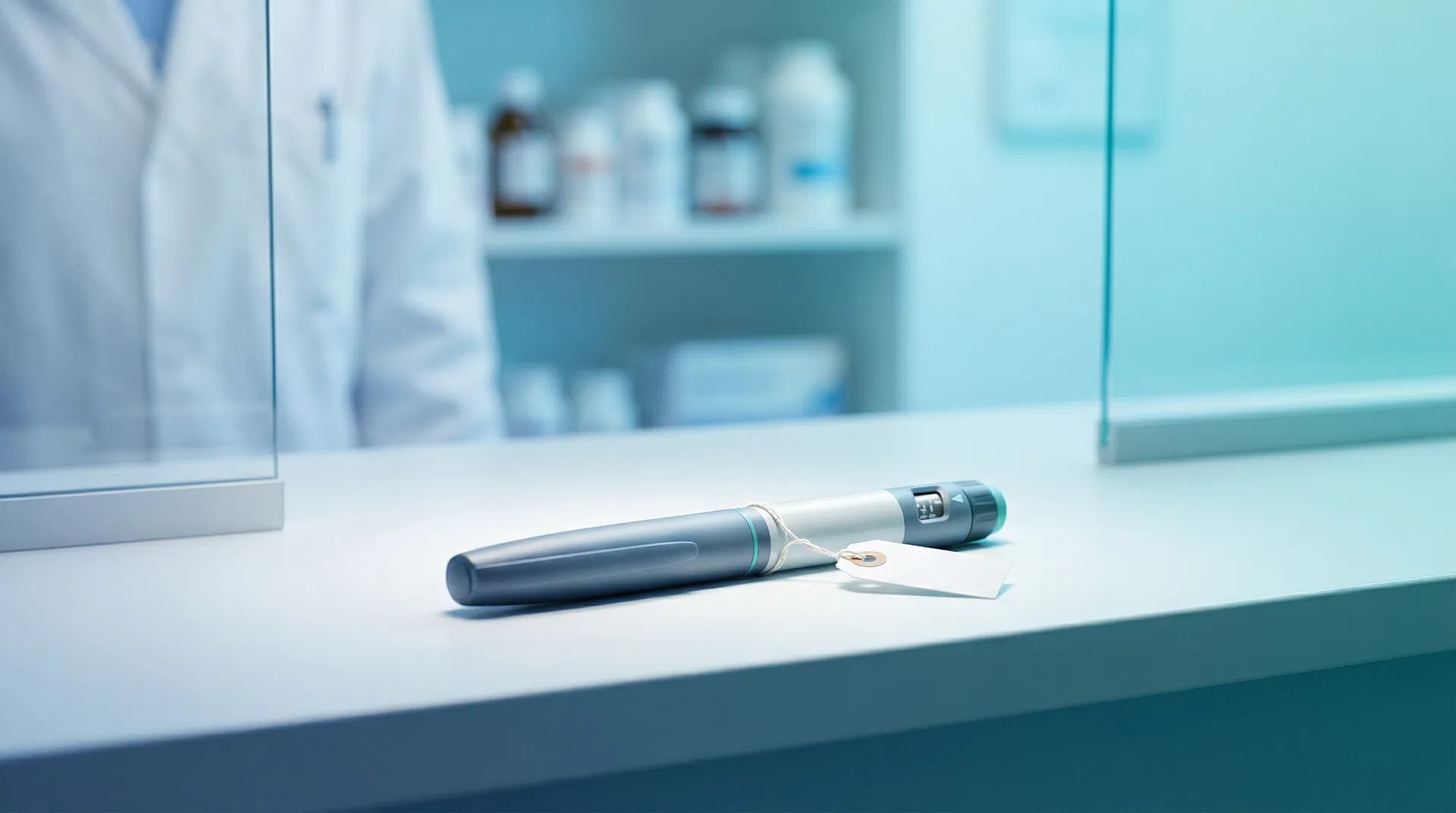
The Short Answer: Same Drug, Two Different FDA Approvals
Mounjaro and Zepbound contain the exact same active ingredient: tirzepatide, a once-weekly injectable medication made by Eli Lilly and Company. The critical difference is their FDA-approved indication:
- Mounjaro is approved for type 2 diabetes — to improve blood sugar (glycemic) control in adults, used alongside diet and exercise.
- Zepbound is approved for chronic weight management in adults with Obesity (BMI ≥30) or overweight (BMI ≥27) with at least one weight-related condition, and for moderate-to-severe obstructive sleep apnea (OSA) in adults with obesity.
Because they are the same molecule, their mechanism of action, dosing schedule, side effect profile, and clinical efficacy are identical. What differs is the indication on the label — and that distinction has major consequences for insurance coverage and out-of-pocket cost.
How Tirzepatide Works: A Dual-Action Mechanism
Tirzepatide is the first approved dual GIP/GLP-1 receptor agonist. Unlike semaglutide (Ozempic, Wegovy), which activates only the GLP-1 receptor, tirzepatide activates both:
- GLP-1 (glucagon-like peptide-1) receptors — stimulates insulin secretion in response to meals, suppresses glucagon, slows gastric emptying, and reduces appetite.
- GIP (glucose-dependent insulinotropic polypeptide) receptors — enhances insulin secretion, improves insulin sensitivity in fat tissue, and may amplify the weight-loss effects of GLP-1 activation.
This dual mechanism is why Tirzepatide consistently outperformed Semaglutide in head-to-head trials for both blood sugar reduction and weight loss. In the SURPASS-2 trial, tirzepatide reduced HbA1c by up to 2.58% versus 1.86% for semaglutide 1 mg. In the SURMOUNT-5 trial published in the New England Journal of Medicine in 2025, participants with obesity lost an average of 20.2% of body weight with tirzepatide versus 13.7% with semaglutide 2.4 mg at 72 weeks.
FDA Indications: Who Each Drug Is For
| Mounjaro | Zepbound | |
|---|---|---|
| Active ingredient | Tirzepatide | Tirzepatide |
| Manufacturer | Eli Lilly | Eli Lilly |
| FDA approval date | May 2022 | November 2023 |
| Primary indication | Type 2 diabetes (glycemic control) | Chronic weight management |
| Secondary indication | — | Moderate-to-severe OSA |
| Who qualifies | Adults with T2D | Adults with BMI ≥30, or BMI ≥27 + comorbidity |
| Off-label use | Weight loss (common) | — |
Can I use Mounjaro for weight loss?
Yes — physicians frequently prescribe Mounjaro off-label for weight loss in patients who do not have Type 2 Diabetes. Clinically, the effect is identical to Zepbound. However, insurance plans that cover Mounjaro only for diabetes will not cover it for off-label weight loss, leaving patients to pay out of pocket.
Dosing Schedule: Identical for Both
Both Mounjaro and Zepbound follow the same titration schedule. Treatment starts at a low dose to minimize gastrointestinal side effects and is increased every four weeks as tolerated:
| Dose | Duration |
|---|---|
| 2.5 mg once weekly | Weeks 1–4 (initiation dose only) |
| 5 mg once weekly | Weeks 5–8 (or maintenance) |
| 7.5 mg once weekly | Optional escalation |
| 10 mg once weekly | Optional escalation |
| 12.5 mg once weekly | Optional escalation |
| 15 mg once weekly | Maximum dose |
Both are administered as a subcutaneous injection (under the skin of the abdomen, thigh, or upper arm) once per week, on the same day each week. Injections can be given at any time of day, with or without food.
Zepbound single-dose vials (2.5 mg and 5 mg) are also available at a lower list price — an important cost consideration discussed below.
Cost Without Insurance: A Significant Difference
Without insurance, both drugs carry a high list price — but Zepbound has introduced a lower-cost vial option that substantially changes the math.
| Mounjaro | Zepbound (autoinjector pen) | Zepbound (single-dose vial) | |
|---|---|---|---|
| List price (4-week supply) | ~$1,112/month | ~$1,086/month | $349–$549/month |
| Savings card (with commercial insurance) | As low as $25/month | As low as $25/month | N/A |
| Without insurance (savings programs) | ~$550/month (LillyDirect) | ~$550/month (LillyDirect) | $349–$549/month |
In December 2025, Eli Lilly reduced the price of Zepbound single-dose vials to $299/month for the 2.5 mg starting dose and up to $549/month for the 7.5 mg dose, available directly through LillyDirect with a valid prescription. This makes Zepbound meaningfully more affordable than Mounjaro for patients paying out of pocket.
Manufacturer Savings Programs
Mounjaro Savings Card: Eligible patients with commercial insurance can pay as little as $25 for a 1-month or 3-month supply. Patients without insurance may access Mounjaro through the Lilly Insulin Value Program or LillyDirect at reduced rates.
Zepbound Savings Card: Similarly, commercially insured patients can pay as little as $25/month. The single-dose vial program through LillyDirect provides a lower-cost option for uninsured patients.
Neither savings card is available to patients on Medicare, Medicaid, or other federal healthcare programs.
Insurance Coverage: The Most Important Practical Difference
Insurance coverage is where the Mounjaro vs. Zepbound distinction matters most in practice.
Mounjaro (Diabetes Indication)
Most commercial insurance plans and Medicare Part D cover Mounjaro when prescribed for type 2 diabetes, because it is classified as an antidiabetic medication. Prior authorization is typically required, and plans may require step therapy (trying metformin or another agent first). Coverage rates for T2D are generally favorable.
Zepbound (Weight Management Indication)
Coverage for Zepbound is far more variable. Many commercial plans cover it for obesity, but a significant number exclude weight management drugs entirely. Medicare Part D does not cover Zepbound for weight loss under current law, though coverage for the OSA indication has been expanding. Starting in April 2026, a government agreement sets the Zepbound copay at $50/month for eligible Medicare patients with OSA.
Key Insurance Scenarios
| Your situation | Recommended drug | Why |
|---|---|---|
| Type 2 diabetes, insured | Mounjaro | Covered as antidiabetic; lower copay |
| Obesity only, commercial insurance covers weight drugs | Zepbound | On-label indication; better coverage odds |
| Obesity only, no insurance | Zepbound (vial) | Lower list price via LillyDirect |
| Obesity + OSA, Medicare | Zepbound | OSA indication now covered by some Medicare plans |
| T2D + obesity, want weight loss | Mounjaro | Covered for T2D; weight loss is a clinical benefit |
Side Effects: Shared Profile
Because both drugs contain tirzepatide, their side effects are identical. The most common are gastrointestinal and tend to be most pronounced during dose escalation:
Common (>5% of patients):
- Nausea (12–22%)
- Diarrhea (12–16%)
- Vomiting (6–13%)
- Constipation (6–9%)
- Abdominal pain (8–11%)
- Decreased appetite (5–11%)
Serious warnings (both drugs carry identical black box warning):
- Thyroid C-cell tumors: Tirzepatide caused thyroid tumors in rodent studies. It is contraindicated in patients with a personal or family history of medullary thyroid carcinoma (MTC) or Multiple Endocrine Neoplasia syndrome type 2 (MEN 2).
- Acute pancreatitis
- Acute gallbladder disease
- Hypoglycemia (especially when combined with insulin or sulfonylureas in Mounjaro patients)
- Acute kidney injury (often secondary to dehydration from GI side effects)
Managing Side Effects
Starting at the lowest dose (2.5 mg) and titrating slowly is the most effective strategy. Eating smaller, lower-fat meals, staying well hydrated, and avoiding lying down immediately after eating can reduce nausea. Most patients find GI symptoms improve significantly after the first 4–8 weeks.
Clinical Efficacy: What the Trials Show
For Blood Sugar Control (Mounjaro / T2D indication)
The SURPASS clinical trial program demonstrated that tirzepatide reduces HbA1c by 1.87–2.58 percentage points at the 15 mg dose — significantly more than semaglutide 1 mg, insulin degludec, and insulin glargine. Approximately 40–52% of patients achieved an HbA1c below 5.7% (normal range) at the highest dose.
For Weight Loss (Zepbound / obesity indication)
The SURMOUNT trial program showed:
- SURMOUNT-1: Participants lost an average of 20.9% of body weight at 72 weeks on 15 mg tirzepatide versus 3.1% on placebo.
- SURMOUNT-5 (vs. semaglutide, NEJM 2025): Tirzepatide produced 20.2% weight loss versus 13.7% with semaglutide 2.4 mg — a statistically significant difference of 6.5 percentage points.
For Sleep Apnea (Zepbound OSA indication)
The SURMOUNT-OSA trials showed that tirzepatide reduced the apnea-hypopnea index (AHI) by approximately 55–63% in patients with moderate-to-severe OSA, with nearly half of participants achieving disease resolution.
Frequently Asked Questions
Can I switch from Mounjaro to Zepbound (or vice versa)?
Yes. Because they contain the same active ingredient at the same doses, switching is straightforward — your physician can prescribe the other brand at your current dose. The main reason to switch is insurance coverage: if your plan covers one but not the other, switching to the covered brand can dramatically reduce your cost.
Is Zepbound stronger than Mounjaro?
No. They are the same molecule at the same doses. Any perceived difference in effect is attributable to the dose, not the brand name.
Will my doctor prescribe Mounjaro for weight loss if I don't have diabetes?
Many physicians do prescribe Mounjaro off-label for weight loss. However, without a diabetes diagnosis, insurance is unlikely to cover it. Zepbound is the on-label choice for weight management.
Does Mounjaro help with weight loss even if I have diabetes?
Yes. In the SURPASS trials, patients with type 2 diabetes lost an average of 7.8–11.2 kg (17–25 lbs) on tirzepatide — a meaningful secondary benefit beyond glycemic control.
Is there a generic version of tirzepatide?
No FDA-approved generic tirzepatide exists as of 2026. However, compounded tirzepatide was widely available during the shortage period. The FDA has declared the shortage resolved, meaning compounding pharmacies are no longer permitted to produce copies of Mounjaro or Zepbound under the shortage exemption.
The Bottom Line
Mounjaro and Zepbound are the same drug with different labels. Your choice between them should be driven almost entirely by your diagnosis and insurance coverage:
- Have type 2 diabetes? → Mounjaro is the on-label, insured choice.
- Have obesity or overweight with a comorbidity, no diabetes? → Zepbound is the on-label choice; check your plan's weight management coverage.
- Paying out of pocket? → Zepbound single-dose vials via LillyDirect offer the lowest available list price.
- Have Medicare and OSA? → Zepbound may now be covered under your Part D plan.
Talk to your physician or pharmacist about which option is right for your clinical situation and insurance plan before starting treatment.
Save up to 80% on this medication
Use a free RxGo discount card at 67,000+ pharmacies — no sign-up, no insurance needed.
About the Author
James Okafor, RPh, MBA
Registered Pharmacist & Health Economics Writer
James Okafor is a registered pharmacist with over 12 years of experience in retail and clinical pharmacy settings. He holds an MBA with a focus on healthcare management and specializes in translating complex drug pricing, formulary, and insurance coverage topics into clear, actionable guidance for patients. Before joining RxGuide, James worked as a clinical pharmacist at a regional hospital system and as a pharmacy benefits consultant for a national PBM. His writing focuses on cost transparency, generic alternatives, and helping patients navigate the U.S. prescription drug system.
View full profile on our Editorial Team page →Zova Health
Protect the Architecture · GLP-1 Protocol
Don't just lose weight. Preserve your health.
GLP-1 medications can cause up to 39% muscle loss alongside fat. Zova's evidence-based protocol — validated by Lancet Diabetes & Endocrinology 2024 — combines AI-powered leucine tracking, injection-day adaptive nutrition, and progressive resistance training to reduce that to just 8.7%.
No credit card. No commitment. Early access only.
Clinical validation:
Structured protein protocols preserved 78% more lean mass vs. standard GLP-1 use alone. — Lancet Diabetes & Endocrinology, 2024
Get the RxGo app — free prescription discounts on the go
Works at 67,000+ pharmacies · No membership needed